Screen-free summer: handmade wood puzzles, brain teasers, and games. Free shipping on orders over $99.

Dementia and Alzheimer’s Puzzles and Games - Creative Crafthouse

Cognitive Challenge Series: Tactile Wooden Puzzles for Daily Engagement

(45 products)

The Cognitive Challenge Series is our line of handcrafted wooden puzzles and activities for tactile, screen-free engagement. The collection on this page features the tactile puzzles many individual caregivers, occupational therapists, and family members choose for adults living with dementia, Alzheimer's, or memory loss. Familiar, hands-on, easy to pick up and put down.

These are not medical devices. They are not intended to diagnose, treat, cure, or prevent any condition. For questions about activities for a loved one, please consult a qualified healthcare provider.

Cognitive Health Puzzles and Games

  • Shop puzzles and games which assist with Dementia and Alzheimer's therapy.

    Dementia and Alzheimer's

    Tactile, familiar wooden puzzles many caregivers and family members choose for adults living with dementia or Alzheimer's.

  • Shop puzzles and games which help with brain trainin, maintenance, and cognitive function.

    Brain Training

    Hands-on wooden puzzles with STEM, logic, and spatial-reasoning challenges for all ages.

  • Shop puzzles and games which improve memory and mental focus.

    Memory and Focus

    Wooden brain teasers built around memory, recall, and sequencing play for all ages.

  • Shop puzzles and games which assist with stroke rehabilitation and traumatic brain injury recovery.

    Stroke and Brain Injury Recovery

    Tactile, hand-friendly wooden puzzles many occupational therapists and caregivers include in their work with adults after stroke or brain injury.
View as

Fred the Cat sitting on a wooden box at the Creative Crafthouse workshop.

Fred the Shop Cat

Say hi to Fred! He is the fuzziest and cutest member of the Creative Crafthouse Family.

Frequently Asked Questions

Are these medical devices or therapy products?

No. The puzzles and games in this collection are not medical devices and are not intended to diagnose, treat, cure, or prevent dementia, Alzheimer's, stroke, or any other condition. They are tactile wooden objects we make for hands-on, screen-free engagement. Many individual caregivers, occupational therapists, family members, and memory care staff use them as part of daily activity routines because the pieces are familiar shapes, the motion is hands-on, and the pieces are easy to pick up and set down. For questions about activities for a loved one living with cognitive change, please talk with a qualified healthcare provider, occupational therapist, or care professional who knows the person. We are wood puzzle makers, not clinicians.

How do I choose puzzles for someone in the early, middle, or late stage of dementia?

The right piece depends on the recipient, not on the stage label, but a general pattern holds. For someone in earlier-stage memory change, more challenging tactile puzzles often stay engaging: the wooden tangram pieces in this collection (Egg Tangram, Heart Tangram, Dragon's Egg Tangram), brain-teaser puzzles like Around the Barn and the Magic Math Square, and tabletop games like Shut the Box 9x9, Dominoes Double 9, and Nine Men's Morris. For middle stages, the collection's simpler shapes and lower piece counts tend to land better: the Crazy Quilt color-matching puzzle, the Sea Creatures Puzzle, the Moon Phases STEM puzzle, and the picture-frame themed pieces (Cats and Dogs, Hawaii Flower Garden, Turtle Creek). For later stages, the most useful pieces are the ones that are still actually picked up and turned in the hand: large smooth wood, no small parts, and no expectation of a "right answer." The Soma Cube (made by Creative Crafthouse in our Cognitive Challenge edition and our Kids edition), the Shapeshifter 27, and the Shapeshifter 64 dexterity toys are common picks here. These are starting points, not prescriptions. The person doing the choosing knows the recipient best, and a piece that engages on Tuesday may not engage on Friday.

Why wooden puzzles instead of plastic or app-based activities?

For tactile engagement, the material matters. Wood has weight, texture, grain, and warmth that plastic does not, and that tactile difference is the engagement. Many caregivers and occupational therapists choose wooden puzzles for activity routines specifically because the recipient picks up the piece, feels its weight, runs a thumb across the grain, and that physical contact is part of what holds attention. App-based activities and screen-based games do other things well, but they cannot offer hand-feel, weight, or the satisfying sound of wood pieces tapping together. Wooden pieces are also easier to clean, more durable in shared-care environments, and do not require charging, login, or technical setup. The puzzles in this collection are made of solid hardwood (cherry, maple, walnut, and similar species) and finished with food-safe oils or clear protective finishes so they hold up to repeated handling.

What does an occupational therapist or memory care professional look for in a tactile activity?

Different professionals weigh different factors, but several patterns come up repeatedly when caregivers and OTs describe the activities they reach for: familiar shapes (the brain does not have to work to recognize them); pieces large enough to grip without dexterity strain; low setup and low cleanup; activities that have no single right answer, so the person cannot feel they are failing; and activities that invite a partner, someone to share the piece, the puzzle, or the conversation that comes with it. The Alzheimer's Association publishes guidance on activities that engage the mind for people living with dementia at alz.org. The American Occupational Therapy Association at aota.org is a useful resource if you want to understand what an OT working in memory care actually does. These pages and the people behind them are far better authorities than a puzzle-maker is. Our role is to make pieces that hold up to the hand and to ship them quickly when an OT or family member identifies something useful.

Are these safe? Choking hazard? Sharp edges?

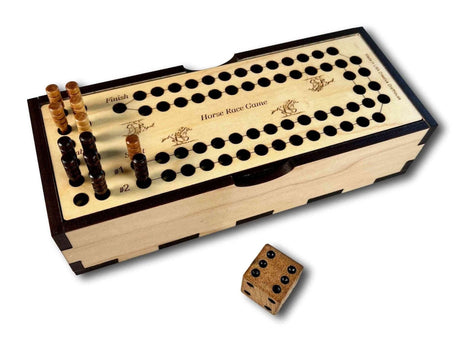
Each product page lists the recommended age range. The puzzles in this collection are designed and finished as wooden objects, not as choke-proof children's toys. Several of the games in this collection (Penny Soccer Game, Horse Race Game, Shut the Box 9x9, Penny Drop Artisan) contain small wood pieces, coins, or dice that are choking hazards for children under 3 and that may pose a swallowing risk in environments where an adult might mouth or pocket small objects without awareness. For care environments where a recipient may not reliably distinguish puzzle pieces from food, choose pieces with larger components: the Soma Cube (large wooden blocks), the Shapeshifter 27 and Shapeshifter 64 dexterity toys, the Crazy Quilt (9 large L-shape and I-shape wood pieces), the Sea Creatures Puzzle, and the picture-frame tangram puzzles. Edges are sanded and finishes are food-safe oils or clear protective finishes. If you have a specific safety question for a specific recipient and a specific environment, email puzzles@creativecrafthouse.com and we will tell you what the piece is built like.

Which pieces are simplest to pick up and set down without frustration?

The pieces caregivers most commonly tell us work in shared-care or memory-care settings are the larger-piece, low-time-pressure puzzles. From this collection: the Soma Cube (large smooth wood blocks, no small parts, no single right answer); the Shapeshifter 27 and Shapeshifter 64 dexterity toys (move the pieces around, no fixed goal); the Crazy Quilt (9 large L-shape and I-shape pieces, color-pattern matching); the Sea Creatures Puzzle (ocean-themed picture frame with familiar animals); the Moon Phases Puzzle (8 large pieces, ages 3 and up); and the picture-frame tangram puzzles (Egg, Heart, Dragon's Egg) when worked open-ended rather than to a target shape. These are not "easier" puzzles in the puzzle-buyer sense; they are pieces that survive being picked up, set down, set aside, and picked up again without becoming a frustration loop.

Can I personalize a piece with a name or photo for the recipient?

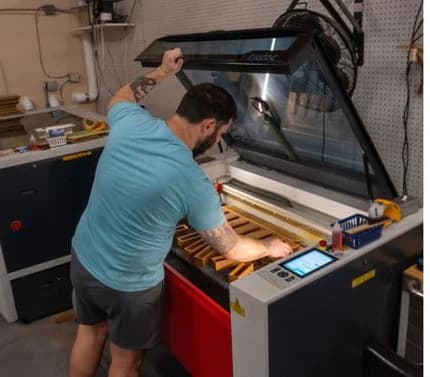
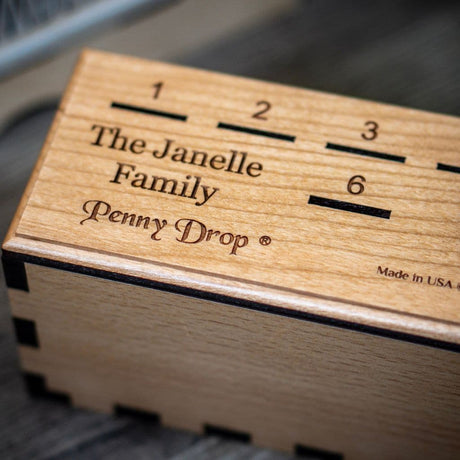
Most of the pieces in this collection take up to 45 characters of personalized text engraving for $4.00, laser-engraved at our Hudson, Florida workshop. The engraving lands on the box, the lid, the frame border, or the puzzle base depending on the design (each product page tells you where for that specific piece). Adding the recipient's first name on a piece they will use daily often holds the activity, especially when the piece is one of many in a shared-care environment and recognizing "their" puzzle becomes part of the engagement. We do not currently produce photo-engraving on these pieces (our laser-engraving produces text and line art, not photo halftones); for photo-based gifts or longer engraving runs, email sales@creativecrafthouse.com or request a quote for custom work. For fonts and engraving examples, see our laser engraving page.

Do you ship to memory care facilities, senior living communities, or adult day programs? Bulk options?

Yes. We regularly ship to memory care facilities, assisted-living communities, occupational therapy programs, senior centers, and adult day programs. For bulk orders (multiple pieces shipped to the same facility, or a recurring program order), email sales@creativecrafthouse.com or request a quote for custom work and Deb on our team will route the order. We can ship to the facility address, include a packing slip in the box for the activity director, and confirm lead time before invoicing on custom-branded runs. Stock pieces ship from our Florida workshop within one business day. We do not currently publish a facility-discount schedule on the website; pricing on bulk facility orders comes back in the quote. If you operate an activity program and want to see a few pieces in person before placing a larger order, we will do our best to work with you on a sample request.

What if the recipient gets stuck or frustrated?

For someone living with dementia or memory loss, "stuck" looks different than it does for a puzzle hobbyist. A piece that engages on Tuesday may not engage on Friday, and that is the pattern, not a failure. A few things caregivers tell us work: rotate two or three favorites in and out so the piece feels new on return; set the piece aside without comment if the recipient sets it aside; meet the activity where the recipient is (if the goal becomes "stack the wood blocks" instead of "solve the Soma Cube," that is still tactile engagement and that is still a good day); and try the same piece in a different room, a different light, or with a different partner in the room. A printed solution sheet ships inside most of the puzzle pieces in this collection; the solution sheet is for the caregiver, not the recipient, so the caregiver can quickly reset the piece between sessions without making it feel like a test. The Alzheimer's Association has practical guidance on activity selection for caregivers at alz.org.

Returns: if it does not suit the recipient, what are my options?

Full terms live on our shipping and return policies page (linked from the footer of every page). The short version: an unused, non-engraved piece can be returned within the published return window. Personalized engraved pieces are made to order, so we handle those case by case. If a piece arrives damaged in shipping or the mechanism does not work as designed, we replace or refund without question; that is a manufacturing or shipping defect, not a return situation. Email sales@creativecrafthouse.com to start any return, replacement, or warranty claim, and Deb on our team will handle it personally. If the piece simply does not engage the recipient and the engraving has been done, contact us anyway: there are often quiet workarounds (a different piece, partial credit toward a different piece) that we can offer that the published policy does not spell out. Buying a tactile activity for a loved one with memory change is a guess about what will land, and we treat it that way.

Are there published studies you can point me to about cognitive engagement and tactile activity?

A few starting points from organizations that publish reliably on this topic. We have linked to landing pages rather than individual papers because active research moves and the landing pages stay updated. The Alzheimer's Association publishes ongoing guidance for caregivers on activities that engage the mind for people living with Alzheimer's and dementia at alz.org/help-support/caregiving/daily-care/activities. The National Institute on Aging (part of the National Institutes of Health) publishes plain-language summaries of cognitive-health research at nia.nih.gov/health/brain-health/cognitive-health-and-older-adults. AARP publishes brain-health journalism that summarizes recent research for a general reader at aarp.org/health/brain-health. The Mayo Clinic publishes patient-facing information on Alzheimer's, dementia, and healthy aging at mayoclinic.org/diseases-conditions/alzheimers-disease. These pages and the people behind them are far better authorities than a puzzle-maker is. Studies suggest that cognitive engagement and mentally active routines may support brain health in older adults; the strength of that evidence and the specific recommendations should come from a qualified healthcare provider who knows the person, not from a product page. This page is for informational purposes only and is not medical advice. Always consult a qualified healthcare provider about cognitive health, memory concerns, dementia, Alzheimer's, stroke recovery, or any medical condition.